
Generative Engine Optimisation Explained

Google isn’t the only search engine anymore. ChatGPT, Perplexity, Gemini, and Claude are answering millions of questions daily. They don’t show ten blue links. They give one answer. If you’re not the source being cited, you’re invisible.
GEO (Generative Engine Optimisation) is how you make sure AI search engines find, trust, and cite your business. It’s SEO’s next chapter.
The Numbers Don’t Lie
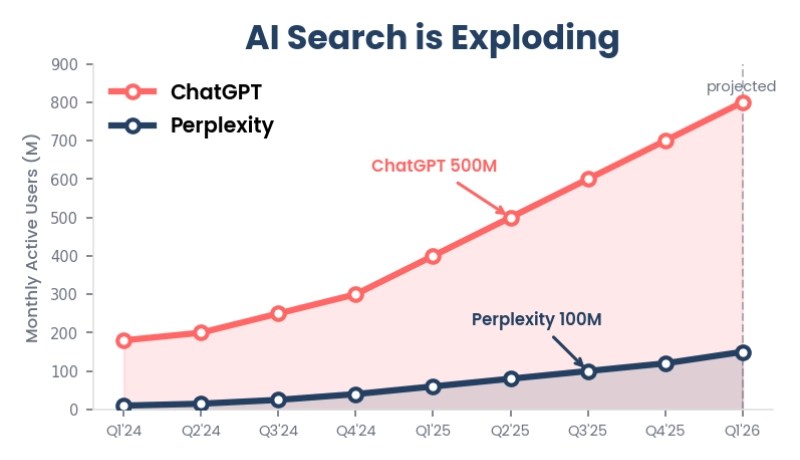
Nearly 60% of Google searches already end without a click (SparkToro, 2024). AI search takes that further: there’s no page to click through to. The AI just tells users what they need to know and either credits you or doesn’t.
In 2024, Gartner predicted that traditional search volume would drop 25% by 2026. The shift is happening now.
SEO vs GEO: The Evolution
GEO doesn’t replace SEO. It builds on top of it. But the signals are different.

What Actually Gets You Cited
Princeton, Georgia Tech, and the Allen Institute tested nine content strategies across thousands of AI queries. Here’s what moves the needle.

Source: “GEO: Generative Engine Optimisation” – Aggarwal et al., Princeton University, 2024
The Big Three
Cite authoritative sources (+40%). Don’t say “studies show.” Say which study, who ran it, when. AI engines cross-reference. Named sources = trust.
Include specific statistics (+37%). “Our clients see better results” is invisible to AI. “43% improvement in page speed within 30 days” gets cited.
Add expert quotations (+30%). Named expertise signals authority. Your team’s real experience counts, especially with specific numbers attached.
And the one to avoid: keyword stuffing actively hurts your AI visibility (-10%). Write naturally.
Stack Methods for Maximum Impact
Individual methods are good. Combinations are better. The research found that pairing strategies compounds the effect.

The winner: Fluency + Statistics at +48%. Content that reads well AND includes concrete data points gives AI engines two strong signals simultaneously.
Our recommendation: every page should combine at least three of the top methods. Citations + statistics + clear writing is a strong baseline.
From Content to Citation
Getting cited by AI isn’t random. It follows a clear path.

Schema Markup: The GEO Multiplier
Structured data tells AI engines exactly what your content is about. No guessing. Pages with proper FAQ schema are up to 40% more likely to be cited.

The GEO Implementation Checklist
Everything your site needs, at a glance.

Should You Allow AI Crawlers?
Short answer: yes. Blocking AI crawlers (GPTBot, ClaudeBot, PerplexityBot) makes you invisible to AI search. Your competitors who allow crawling get cited instead.
Most major AI companies now separate training crawlers from search crawlers. You can allow search access while maintaining control. The visibility benefits far outweigh the risks for most businesses.
Bots to allow in robots.txt:
- GPTBot & ChatGPT-User (OpenAI)
- PerplexityBot (Perplexity)
- ClaudeBot & anthropic-ai (Anthropic)
- Google-Extended (Google Gemini)
- Bingbot (Microsoft Copilot)
Where Does Your Business Stand?
GEO is still early. The businesses that invest now will own the AI search results in their industry. The ones that wait will be playing catch-up.
We offer a free GEO audit that tests your brand across ChatGPT, Perplexity, Gemini, and Claude. We’ll show you exactly where you stand and what to fix.
Get in touch: hello@extremewebbing.com